





27 Oct 2026
AI vs Human Creativity: Is Marketing Losing Its Human Touch?
If you run a business, you’ve probably had this thought: why pay five people to create something AI can produce in five minutes?
It’s not an unreasonable question.
AI can write. It can produce visuals. It can analyze and optimise. It can do market research. It never sleeps. It’s available around the clock. And it keeps getting better.
But you know what else AI can do? It doesn’t understand the context. It can miss the nuance behind the brief. It can’t capture the brand’s essence. And it can’t justify a design decision in a stakeholder meeting.
Yes, it can produce at an incredible scale. But when everyone can produce more, producing more stops being the advantage.
AI’s capabilities are no longer the question. But let’s explore the perils of valuing AI over humans:
When AI’s Efficiency Comes at the Cost of Judgment
AI can become a trainee. It can learn from your preferences and also evolve with every choice you make. The more context you give it, the better it can anticipate what you might want next.
But that still doesn’t make it a substitute for judgment, taste, ethics, or empathy. It can spot patterns in the choices that you have made, but it won’t be able to see the reasons why one option is better than the other. It can emulate a particular style but will not be able to evaluate whether the final product is appropriate in the particular situation. It can give an answer, but it cannot be held responsible for the decision-making process.
While AI can give you ten directions, a human still has to decide which one is worth pursuing. It can generate the image, but someone has to notice when the image feels wrong. It can write the campaign, but someone has to recognise when the message crosses a line.
This is why the importance of human contribution increases with the progress of AI technology. It is not merely about creation anymore. It is to question, choose, refine, reject, and sometimes take the less obvious route.
The Peril of Losing Originality
Originality is another casualty we need to watch out for. As we’ve already discussed, AI is remarkably good at spotting patterns. It predicts the most likely next word, pixel, or note by drawing on enormous amounts of existing human work. It can combine those patterns in remarkably sophisticated ways, but it is still working from what already exists.
But human creativity is rarely neat. It comes from unlikely places: emotions, curiosity, frustration and personal history.
Our experiences also give us a perspective that isn’t identical to anyone else’s. Even when two people work with the same information, they can interpret it differently because they bring different experiences, beliefs and observations to it. That’s where originality comes from.
Humans have ideas, thoughts and opinions that AI simply cannot imitate. It has no lived experience. It also doesn’t have a worldview it needs to express or a point of view it feels compelled to express.
All it does is follow a prompt it is given. The intention behind the work still has to come from a person.
That distinction matters in marketing too. Two brands can ask AI to create a campaign about the same product and get perfectly competent results. But the brand that brings an unexpected creative direction is the one more likely to produce something people actually remember.
The Creativity Cost of Relying Too Much on AI
There’s another side to AI’s efficiency. The more we rely on it to generate ideas, solve problems and make creative decisions, the greater the risk of letting it do the thinking for us.
McKinsey’s workforce research has cautioned that excessive dependence on AI outputs can weaken critical thinking and reduce the generation of novel ideas unless people actively counteract that effect.
The concern isn’t that AI suddenly makes people less creative. It’s that we may stop exercising creativity when a usable answer is always one prompt away.
And the numbers around AI adoption make that worth paying attention to. The Content Marketing Institute found that 87% of technology marketers use generative AI, yet only 33% reported improved creativity as an impact of using it.
If you use AI for every idea, headline, visual or campaign direction, you may create faster, but you’re also exercising your own creativity less. And eventually, that lack of creativity shows in your marketing efforts too. For example, if every blog on your website is generated with AI, you fail to explore creative angles. Your social media becomes predictable.
That’s why using AI well requires knowing when to step away from it.
Let it generate possibilities. Let it handle the repetitive work. But leave room for the human mind to wander, question, experiment and make connections that weren’t in the prompt.
So, Where Do Humans Still Matter in Marketing?
We’ve looked at what AI can do and the risks of relying on it too heavily. Now let’s understand what human expertise actually brings to marketing that AI can’t.
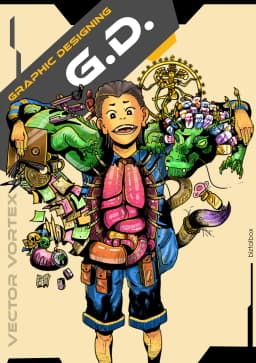
Beyond AI-Generated Visuals: The Role of Graphic Designers
AI might be able to design a new logo in a matter of minutes or create a business card in seconds. But getting the right result often takes more than one prompt. Designers may need to refine the instructions, make nuanced changes, or manually fix parts of the image using their own skills.
And even when it gives impressive outputs, it cannot capture the essence of the brand. It may not have the right visual direction, personality or connection to the brand. A designer brings the judgment needed to know what works, what needs changing, and how to make the final design stand out.
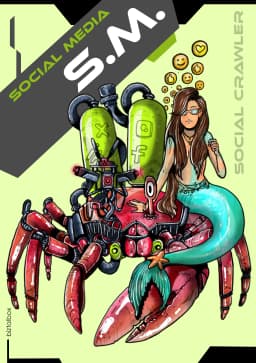
Why Social Media Management Needs Human Instinct
Of course, artificial intelligence can write catchy posts, suggest content ideas, and even fill in the content calendar in no time.
But one cannot blindly post something that AI outputs deemed engaging. A trend can be perfect for one brand and embarrassing for another. A joke can be funny in one context and tone-deaf in another.
A social media manager knows the brand, understands its audience and can tell when a trend is worth jumping on and when it is better left alone.
AI can give you 30 post ideas. But only an experienced social media manager knows which three are actually worth posting.
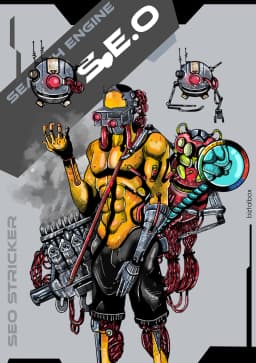
SEO Specialists: Understanding the Human Intent Behind Search
AI can find keywords, analyse competitors and write an SEO-friendly article before you’ve finished your coffee. But someone still needs to understand search intent, spot content gaps and figure out what users need.
AI can surface the answers, but an SEO professional has to question them, connect the dots and decide what strategy makes sense. For example, what if the competitor is ranking with weak content? What if the keyword gets traffic but brings the wrong audience?
And if every brand uses AI to study what already ranks, then uses AI to create something similar, we end up with an internet full of repetitive blogs. Where does the new idea come from?
Why Content Writing and Copywriting Need More Than AI-Generated Words
AI can write a first draft. It can suggest headlines. It can build an outline. It can turn a collection of ideas into something that vaguely resembles an article.
But it gives a brief that is similar to ten other pieces online, fails to engage the readers and is completely devoid of any soul or perspective. It doesn’t add anything to your brand and is hardly worth reading.
A good writer, on the other hand, not only gets the information across, but also knows what to emphasize and what to cut. They know how to write genuinely useful content that helps readers.
And even copy generated with AI is very generic, lacks nuance and fails to resonate. AI-generated text can support visual and creative work, but writers are needed to turn that material into strong brand messaging.
And did you know that only 7% of marketers reportedly publish AI content without revising it. Because nobody wants their brand to sound like it was written by the same robot as everyone else. Writers bring the little things AI tends to miss: a sharper joke, a better analogy, and a surprising angle.
Leave a Reply
Your email address will not be published. Required fields are marked *
Comments